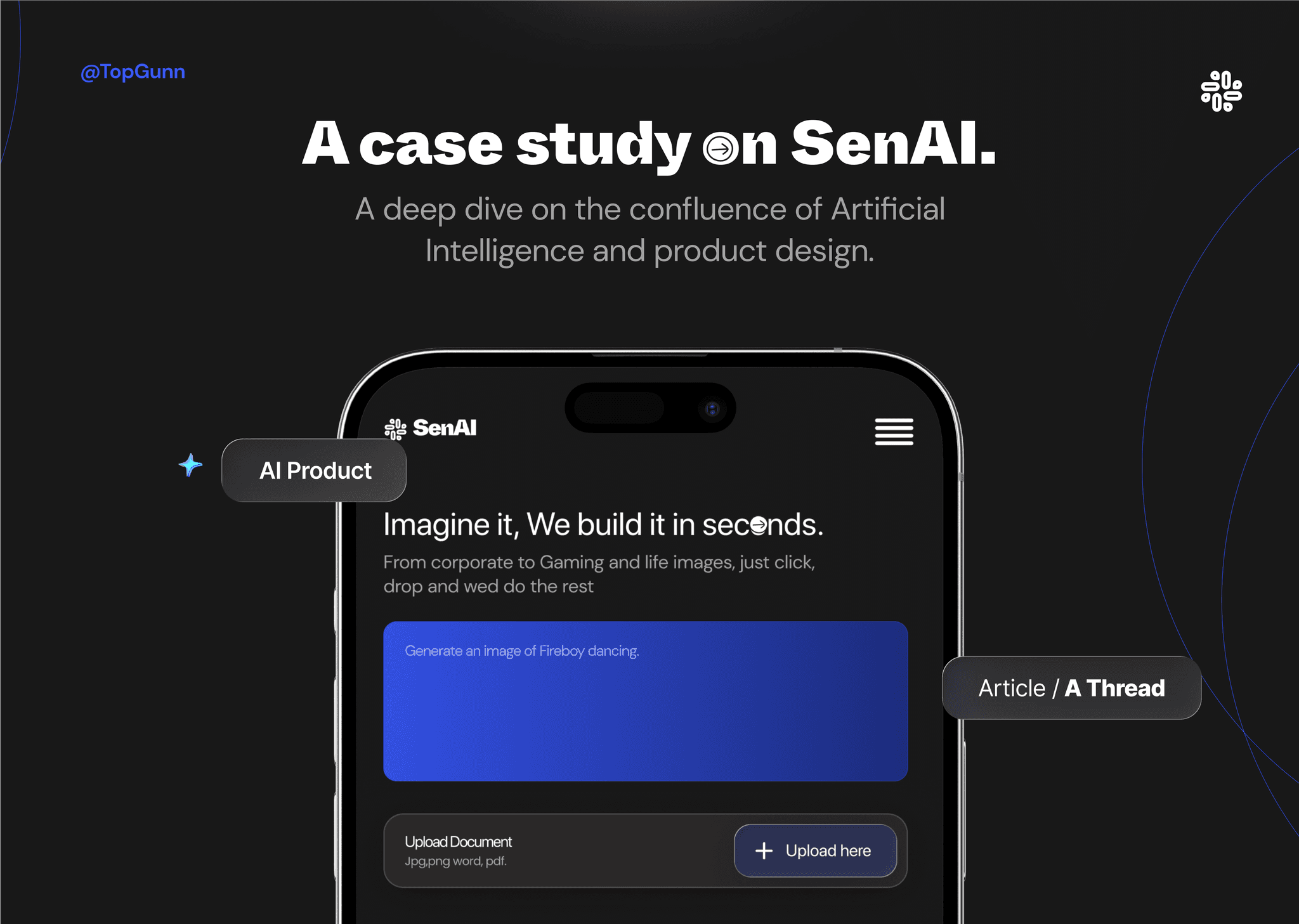
A case study on SenAI

A deep dive into the human - AI limits in product design

Role

UX/UI Designer

Industry

AI

Duration

2 WEEKS
Sen spalsh screen
Sen spalsh screen
Sen spalsh screen

Problem Statement.

Generative AI knows how to produce but not how to listen. My goal with SenAI was to close that gap: to design an interface that feels like dialogue, not instruction.

My Role

As the Lead Product Designer, I defined the design philosophy and execution across all phases:

Research & Insights

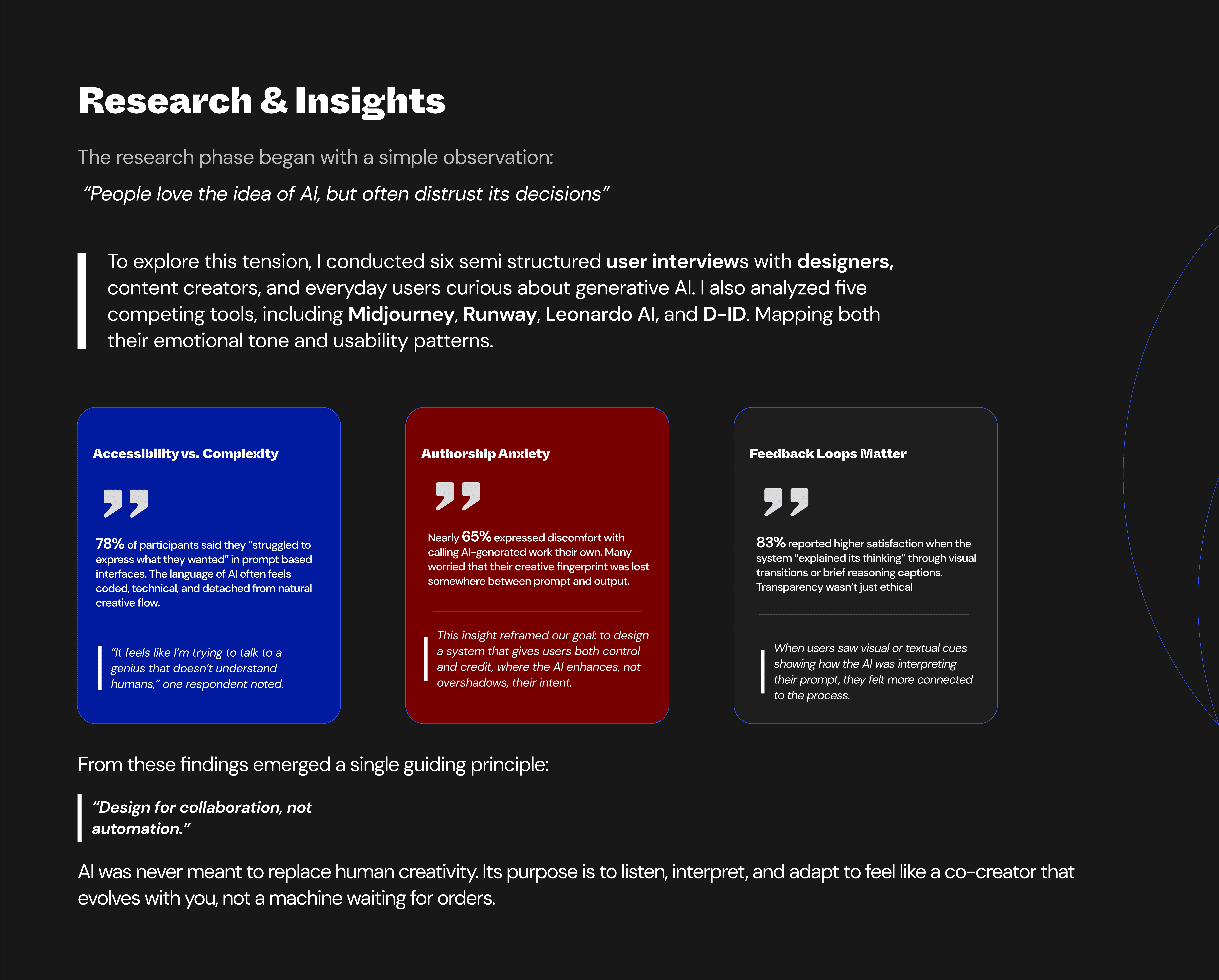
To explore this tension, I conducted six semi-structured user interviews with designers, content creators, and everyday users curious about generative AI. I also analysed five competing tools, including Midjourney, Runway, Leonardo AI, and D-ID. Mapping both their emotional tone and usability patterns. To explore this tension, I conducted six semi-structured user interviews with designers, content creators, and everyday users curious about generative AI. From these findings emerged a single guiding principle: “Design for collaboration, not automation.”

Problem Statement.

Generative AI knows how to produce but not how to listen. My goal with SenAI was to close that gap: to design an interface that feels like dialogue, not instruction.

My Role

As the Lead Product Designer, I defined the design philosophy and execution across all phases:

Research & Insights

To explore this tension, I conducted six semi-structured user interviews with designers, content creators, and everyday users curious about generative AI. I also analysed five competing tools, including Midjourney, Runway, Leonardo AI, and D-ID. Mapping both their emotional tone and usability patterns. To explore this tension, I conducted six semi-structured user interviews with designers, content creators, and everyday users curious about generative AI. From these findings emerged a single guiding principle: “Design for collaboration, not automation.”

Research & Insights
Research & Insights
Research & Insights
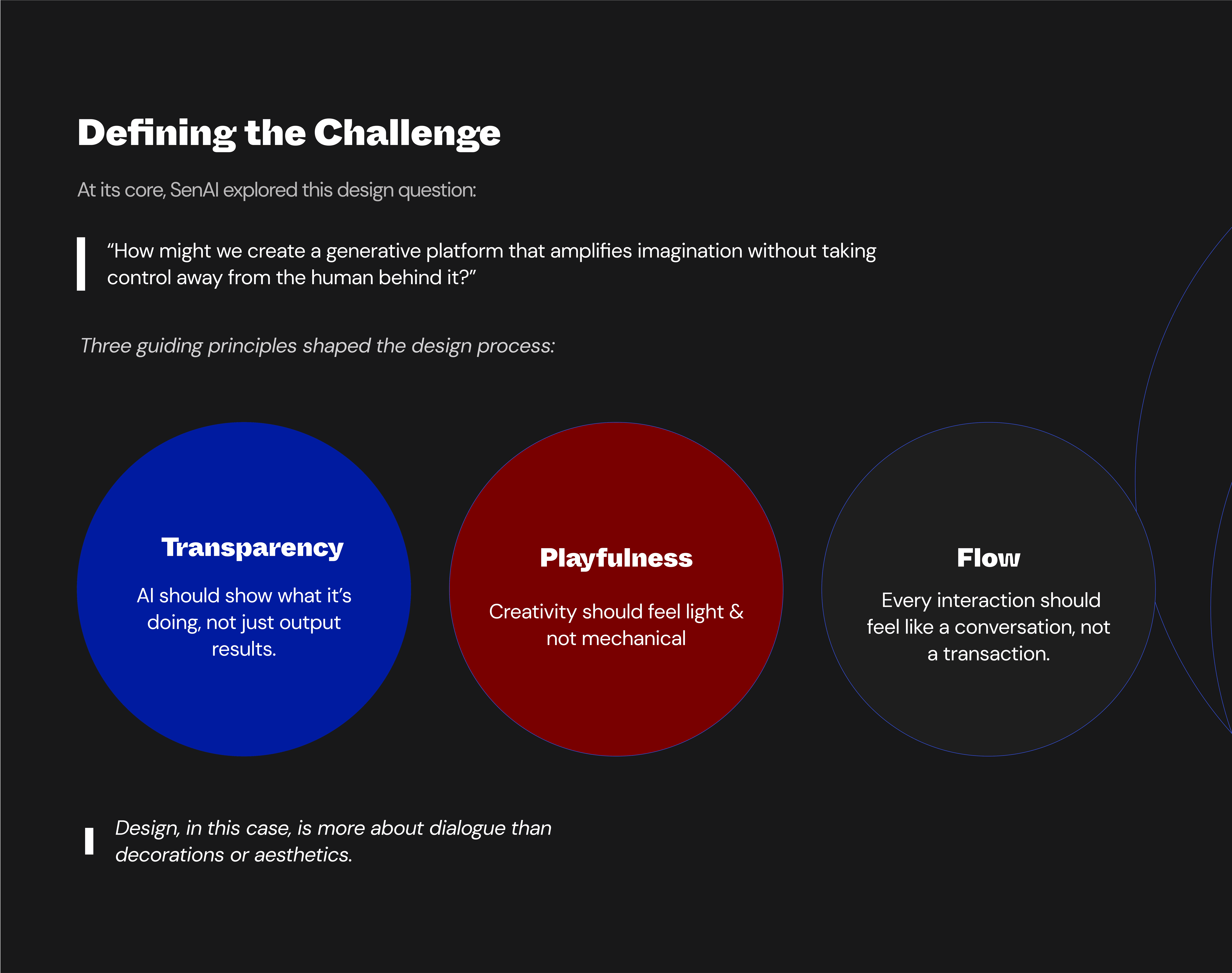
Defining the challenge

Ideation and concept development

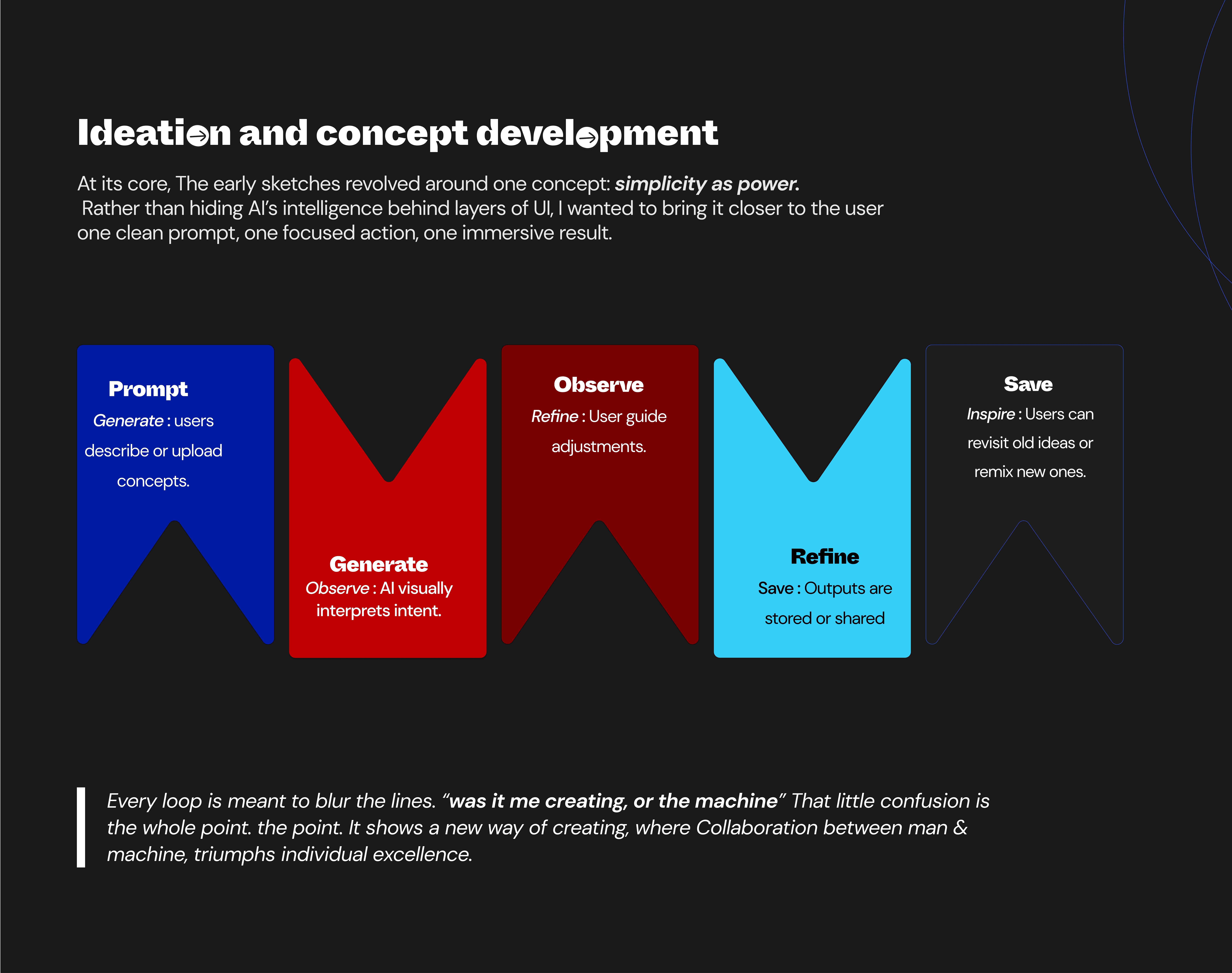
At its core, the early sketches revolved around one concept: simplicity as power. Rather than hiding AI’s intelligence behind layers of UI, I wanted to bring it closer to the user with one clean prompt, one focused action, and one immersive result. "Every loop is meant to blur the lines. Was it me creating, or the machine?" That little confusion is the whole point. It shows a new way of creating, where Collaboration between man & machine, triumphs individual excellence
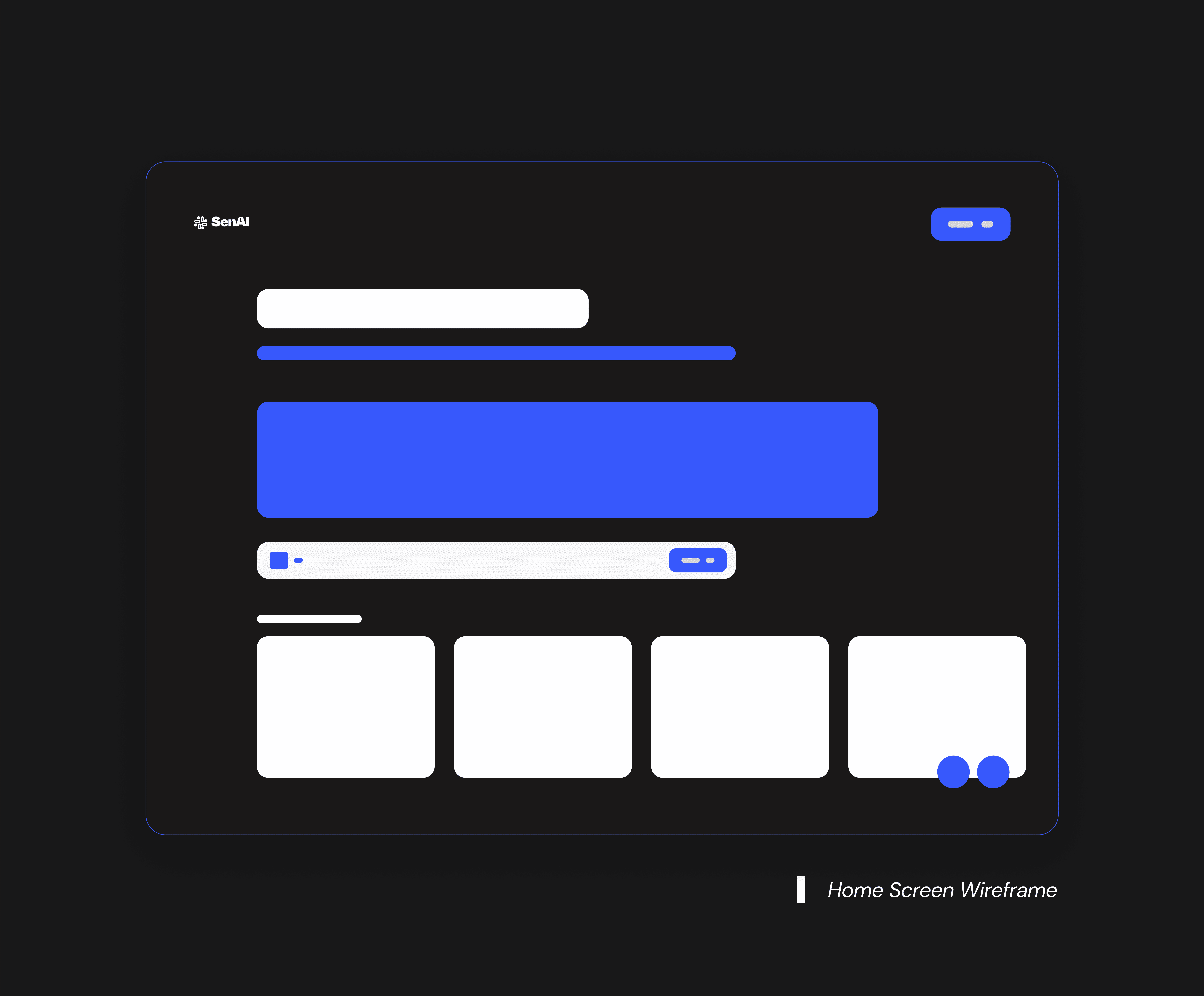
Ideation
Ideation
Ideation
Idesign direction
Idesign direction
Idesign direction
HI-fI Design
HI-fI Design
HI-fI Design

Reflection

I had a product after six weeks. But more importantly, I couldn't stop thinking about a question.

 When you use AI to design something, who is the author?
 Is it the person who clicks "Generate" or the person who trained the model?
 Or maybe design and AI don't have to stop where one starts. Maybe they meet in the middle and share their goals, instincts, and gut feelings.


Reflection

I had a product after six weeks. But more importantly, I couldn't stop thinking about a question.

 When you use AI to design something, who is the author?
 Is it the person who clicks "Generate" or the person who trained the model?
 Or maybe design and AI don't have to stop where one starts. Maybe they meet in the middle and share their goals, instincts, and gut feelings.


Other projects

Copyright 2024 by UX KAISER

Copyright 2024 by UX KAISER

Copyright 2024 by UX KAISER

Create a free website with Framer, the website builder loved by startups, designers and agencies.